
Iran's ambassador to the UN said the US allocation of $3 million for 'promoting democracy and human rights' in Iran was a clear violation of a 1981 US-Iranian agreement signed at Algiers.

The ceasefire is still technically holding, to the extent that no overt hostilities have been reported yet, but the rhetoric has hardened dangerously. The week ahead will also clarify whether the Islamabad failure was a negotiating tactic or whether Washington has genuinely locked itself into a position from which the only exits are climb-down, escalation, or the slow bleed of a new status quo that nobody chose and nobody controls. Prem Panicker continues his must read blog on the Iran War.

The United States and Iran held their highest level of talks in over 30 years, during which Tehran put "possibilities" on the table to resolve the longstanding dispute over its nuclear programme, even as Washington sounded a cautious note.

Foreign Minister Mohammad Javad Zarif tweeted that the attack near the Iraqi border was carried out by 'terrorists recruited, trained, armed & paid by a foreign regime'.
The Islamic State of Iraq and the Levant is a dangerous phenomenon, but the terrorist organisation can not be defeated by air strikes alone, Iranian Foreign Minister Mohammad Javad Zarif has said.
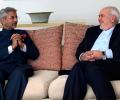
'Tehran,' Foreign Minister Zarif said, 'had expected the Modi government to be "more resilient" in the face of Washington's bullying,' notes Ambassador M K Bhadrakumar.

The United States has lifted most of its sanctions against Iran after a UN watchdog reported that Tehran had complied with a nuclear weapons deal.

Rediff.com takes a look at some personalities who are likely to win the prize this year.

United States President Barack Obama has hailed the "historic understanding" reached between world powers and Iran over the framework of a deal on its contentious nuclear programme, even as Israel warned that it would threaten the Jewish state's survival.
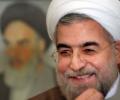
In a major diplomatic breakthrough, the foreign ministers of United States and Iran will hold talks on Tehran's controversial nuclear drive at a landmark meeting on Thursday -- the first between the two states in more than 30 years.

India has been eyeing deeper energy ties with Iran and has already lined up $20 billion as investment in oil and gas as well as in petrochemical and fertiliser sectors there.
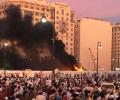
Three suicide bombers struck in Saudi Arabia on Monday, including a shocking attack at Islam's second holiest site, the Prophet's Mosque in Medina, where four security guards were killed.

Deputy Interior Minister Mohammad Hossein Zolfaghari told Iran's state TV the apparently male attackers wore women's attire.
'Tehran senses that the Modi government is inexorably gravitating toward the US-Israeli-Saudi axis, jettisoning India's traditional independent Gulf policies,' notes Ambassador M K Bhadrakumar.

India is apprehensive about the Taliban's return as it would mean loss of access to Baluch rebels and help to the restive tribals of Waziristan. This would be a setback to the Indian strategy of returning the compliments of death by a thousand cuts to Pakistan, notes Colonel Anil A Athale (retd).
He did not mention the issue of Jammu and Kashmir.

The implications of the interim deal between Iran and the world's big powers go far beyond the nuclear programme, says Nitin Pai

The reversal of Trump's policy with regard to Iran, like the withdrawal from the Paris Agreement, may not be a matter of just turning the clock back, but one of patient negotiations, with uncertain consequences in the post-COVID-19 world, observes Ambassador T P Sreenivasan.

Saudi Arabia has severed diplomatic ties with Iran following attacks on the kingdom's embassy and consulate in the Islamic Republic over the execution of a Shiite cleric.

From being on the verge of war and violence, West Asia has actually got a sudden reprieve. Seema Mustafa explains

If things work out, it will be a great leap forward in the Indian-Iranian economic ties in the new phase of Iran's reintegration with the world market following the lifting of sanctions, says Ambassador M K Bhadrakumar.

Iran's decision to keep India out and welcome China to the scene is a huge strategic setback for India, observes Dr Rajaram Panda.
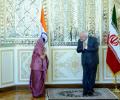
India's low passion, very cautious, relationship with Iran of the last 36 years awaits transformation, says Lieutenant General Syed Ata Hasnain (retd). Prime Minister Modi's visit cannot be a negotiating event; it is a symbolic one to strengthen the politico-diplomatic relationship.

Negotiating a sustainable compromise with Iran is not getting any easier, and this delay might not yield the desired result of bringing Tehran's nuclear programme under stringent limits, says Claude Smadja

It is easy to foretell that negotiating a comprehensive and final agreement on the Iran nuclear issue is by no means an easy task. It involves hard negotiations, but the hardest step has been taken, says Ambassador M K Bhadrakumar, who was among the first group of foreigners to visit the the top-secret Arak plant hidden behind barren mountains south of Tehran.

'Clearly, from the Indian viewpoint, the US retrenchment from Asia cannot be happening as good news.' 'The abandonment of the US' pivot to Asia exposes the US-Indian partnership to be a mere transactional relationship,' says Ambassador M K Bhadrakumar
 © 2026 Rediff.com - Advertise with us - Disclaimer - Privacy Policy - Sitemap - Feedback - About us - Terms of use - Grievances